VCAT deal grants permit rejected by councillors
By Corey Everitt 24/01/2024
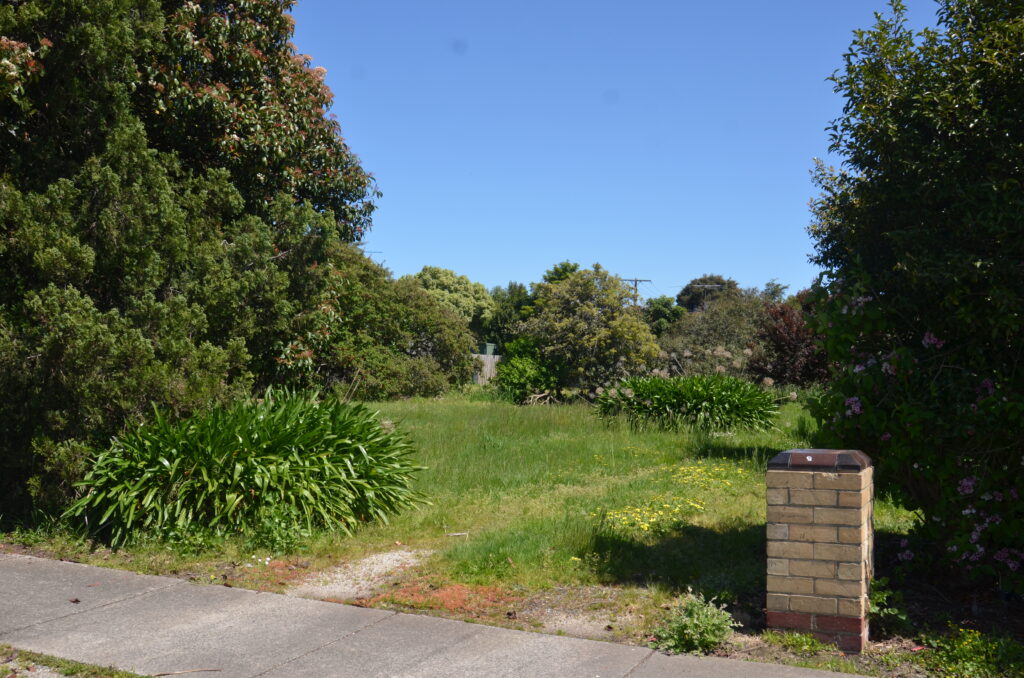
Photo Caption: Site of the Savage Street childcare centre.
The mystery surrounding the proposed childcare centre on Savage Street, rejected by councillors and then abruptly granted behind closed doors, was the result of seeking the best outcome by striking a deal to avoid an unfavourable VCAT outcome, council sources have revealed.
The Gazette has reported on a heavily redacted Freedom of Information request by Henk and Kathy Heeremans, pertaining to the proposed childcare centre and the council’s about-face approval.
Months have gone by with little revealed about what happened between Cardinia Shire Council, the applicant and VCAT that overturned the decision of councillors, leaving locals like the Heeremans frustrated.
“It was behind closed doors, with neither the councillors nor the public,” Mr Heeremans said.
“The town planners wanted it from the start. Who were they representing when they went to VCAT? The councillors or the applicant?
“From day one it was a traffic issue and now it’s about how they handled it.”
The proposal for a childcare centre at 1–3 Savage Street was originally put before councillors at a Town Planning meeting in October 2022, where objections were made, particularly regarding traffic, as the street is a no-through road.
The proposal was originally supported by council officers, but an alternate motion by councillor Carol Ryan to reject the proposal was carried five votes to four.
The matter was taken to VCAT, but a formal hearing did not occur. It was settled via a consent order between the council and the applicant, where the proposal acquired a permit. It is the details of this agreement and what led to it that are now in question.
The council’s general manager of Liveable Communities, Lili Rosic, explained the matter was not “overturned” and was settled through mediation, through which the proposal acquired a planning permit.
“On 3 April 2023, council officers provided a briefing to councillors on this matter, outlining legal advice, costs and risks associated with a determination. It was advised that council’s manager of Planning and Design would progress the VCAT matter on council’s behalf to obtain the best outcome for the residents, with consideration to the Planning Scheme and council’s resolution. The manager of Planning and Design is authorised to instruct council’s planners and/or its legal representative on any VCAT matters,” Ms Rosic said.
“The council decision was not overturned; however, the matter was settled during mediation between the applicant and council, as recommended by council’s legal representative.
“Once the application was referred to VCAT, council had no further decision-making power. As a party to the VCAT case, council did have an opportunity to recommend to VCAT planning conditions in the event that VCAT decided to issue a permit and to participate in a mediation process.
“Subsequently, VCAT set aside council’s decision to refuse the planning application for the use and development of land for a childcare centre at 1–3 Savage Street, Pakenham, and a planning permit was issued subject to conditions. An additional on-site parking space, landscaping and acoustic measures formed part of the mediated outcome.”
In an email from the council’s manager of Planning and Design, Luke Connell, to Henk Heeremans, which was seen by the Gazette, Mr Connell said lawyers advised there was a “very slim chance” the council’s refusal would be upheld at a hearing and that council would have to “wear the costs” of the applicant’s legal bills.
In the order issued by VCAT approving the negotiated permit, all conditions remained from the original council proposal, with the addition of a Car Parking and Waste Management Plan, which requires the applicant to demonstrate specific standards of access impacting both commercial and personal vehicles.
Ms Rosic said that when council is before VCAT it “does not always represent” the expressions of objectors, as no objector made a submission to VCAT in this case, and it is recommended they do so in the future.
“In its decision-making process, council considers the objections received but does not always represent the exact intent of what objectors have raised as concerns,” Ms Rosic said.
“To be fully confident that the objection and intent is clearly heard by the tribunal, it is highly recommended that objectors become a party to a hearing so they can speak on behalf of their objections.”
In the same email, Mr Connell explained that council is not “legislatively required” to notify objectors of the council’s decision-making process at VCAT, but said personally notifying them would have been “beneficial”.
“I don’t disagree that an email updating the progress of the application would have been beneficial to the objectors involved in the process,” Mr Connell said.
When it came to objecting again at VCAT, Mr Heeremans said it never seemed necessary for objectors.
“None of the objectors participated because the councillors voted against it, so we went home thinking that would be represented at VCAT,” he said.
“If they went to a hearing and VCAT ruled to overturn it, then we would have accepted it, but that’s not what happened.
“How is it possible that councillors can vote against it and the town planners can then overturn it?”